Hackages
A free learning platform built to grow a consultancy

At a glance
- Role
- Product Designer
- Team
- Marketing manager (growth), sales, video editor
- Timeline
- 2021
- Scope
- Strategy, research, design and continuous improvement through data
- Focus
- EdTechGrowthIterative Design
The betWin developers with genuinely free, easy learning, and let that trust carry the consultancy's B2B services.
- −13%Bounce rate after V2
- 1.2 → 2.88Pages per session
- 45s → 2m40sSession duration
The short version
- Problem: Hackages, a developer community turned tech consultancy, moved online during the pandemic and needed a platform that served two audiences: developers who learn, and companies who buy.
- Bet: Make learning free and effortless to attract developers, and use that trust to promote B2B services.
- Result: Through monthly design sprints, engagement climbed sharply: pages per session from 1.2 to 2.88 and session duration from 45 seconds to 2 minutes 40.
The problem worth solving
Hackages started in 2015 as a learning community for developers and grew into a consultancy offering education services to companies. During the pandemic it moved online with a learning platform.
In my first meeting with senior management, the real business goal became clear: promote the company’s B2B services to companies, through developers who use the free learning materials.
How do you build one platform that developers love for learning, and that turns their trust into business for a consultancy?
My role
Product designer, responsible for designing and building the platform and improving it continuously through testing and data analysis, in a cross-functional team with a growth marketing manager, a sales expert and a video editor.
The strategy
Two audiences, one platform. Research with marketing data and interviews with software engineers produced two personas:
- Louis, 26, mid-level engineer: sees Hackages as a community of high-value people he can learn from. He needs a simple learning experience tailored to his skills and interests.
- Chris, 40, engineering manager: looking for a trusted partner to solve technical problems. He needs a clear explanation of the services and a clear call to action.
Ship, measure, iterate. I ran design sprints of one to two months: build, then spend about two weeks testing and studying analytics to understand the impact of each change. Google Analytics and Tag Manager went in from the first sprint.
Key decisions
1. V1: Lay down the structure, instrument everything
The first sprint set up the learning pages, the B2B pages and analytics.
What we learned: V1 got people to learning content, but not enough visitors understood what the platform was: the bounce rate was 56%.
2. V2: Explain the platform on the landing page
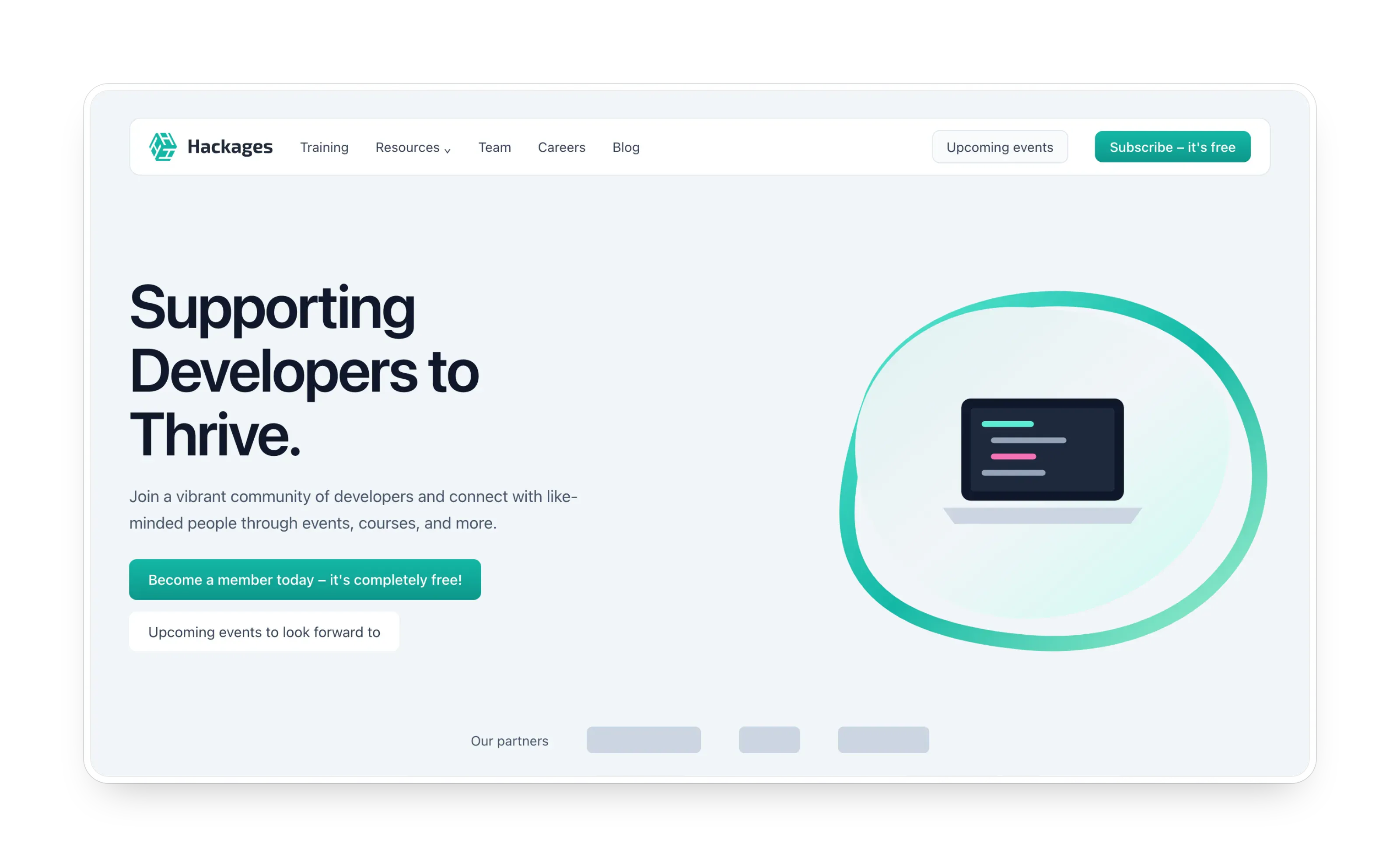
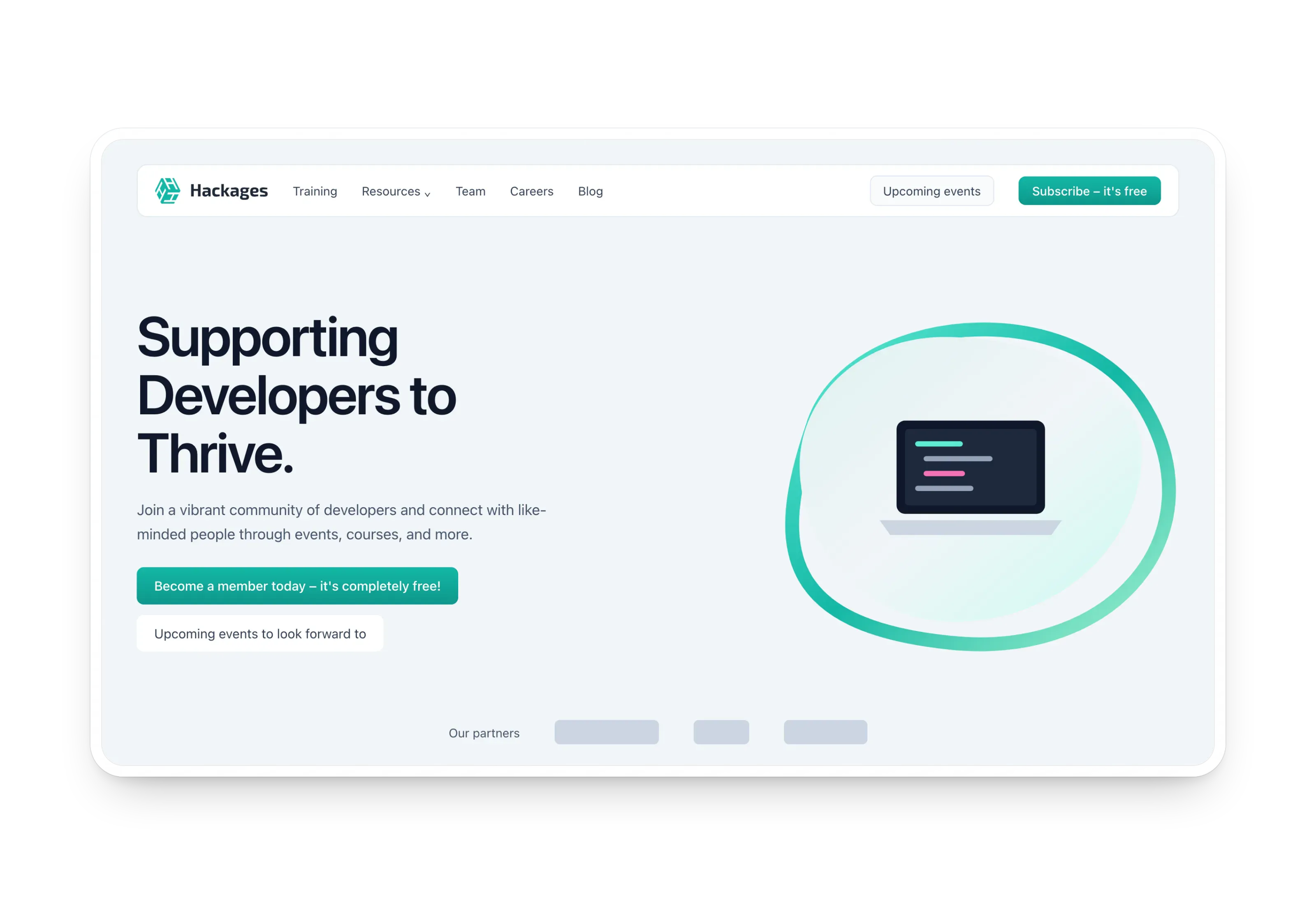
The landing page was redesigned to tell new visitors what Hackages is and what to expect.
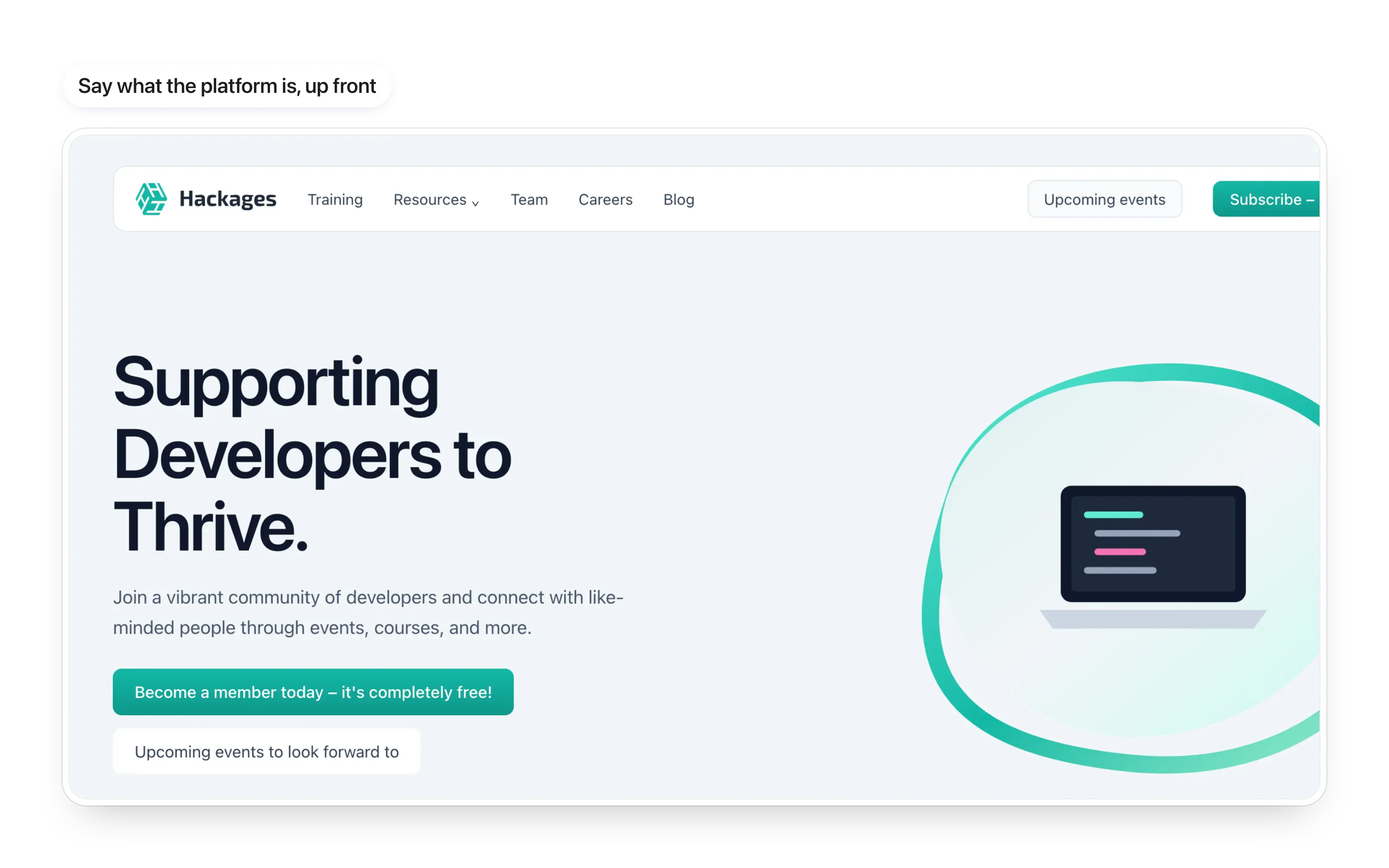
What we learned: bounces dropped by 13% and users understood the platform. But B2B pages got little traffic, and testing found two learning-page issues: people couldn’t move between lessons, and articles were hard to read with small text and a wide layout.
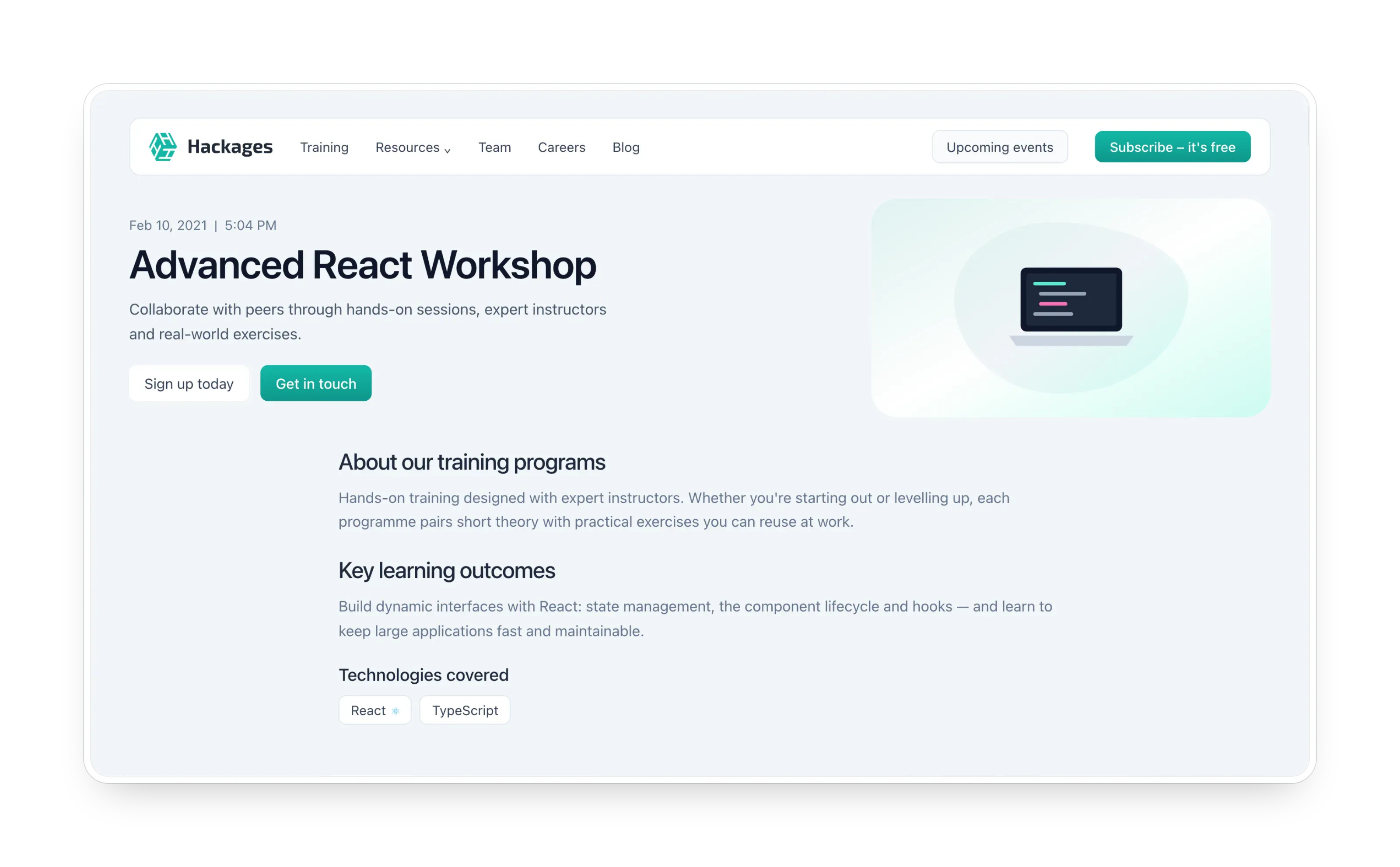
3. V3: Separate the B2B path, fix the learning experience
Two goals: give business visitors their own clear navigation, separate from learning, and lift engagement on learning pages with focused fixes to navigation and readability.
What we learned: pages per session rose from 1.2 to 2.88 and session duration from 45 seconds to 2 minutes 40. But paid-course sign-ups stayed low, and B2B visitors felt overwhelmed by too many pages.
4. V4: Simplify Hackages for businesses
Feedback was consistent: the B2B pages felt vague, without a clear explanation of services or a clear call to action. V4 focused on simplifying that path. (In progress when this study was written.)
The hard trade-off
Free learning vs. B2B conversion. The business goal was B2B, but the engine was developers using free content. Pushing the sales message too early would erode the trust that made the platform work; hiding it would leave the business goal unmet. The answer was to separate the paths: a frictionless learning experience for Louis, a focused, explicit route for Chris.
Impact
- Bounce rate −13% after the V2 landing page redesign.
- Pages per session 1.2 → 2.88 after V3.
- Session duration 45s → 2m40s after V3.
What I learned
Short sprints with real analytics beat big up-front redesigns. Each version answered one question and raised the next: clarity first, then engagement, then conversion. Designing for two audiences on one platform is mostly about separating their paths without losing what connects them.
More screens